Monday, December 26, 2011

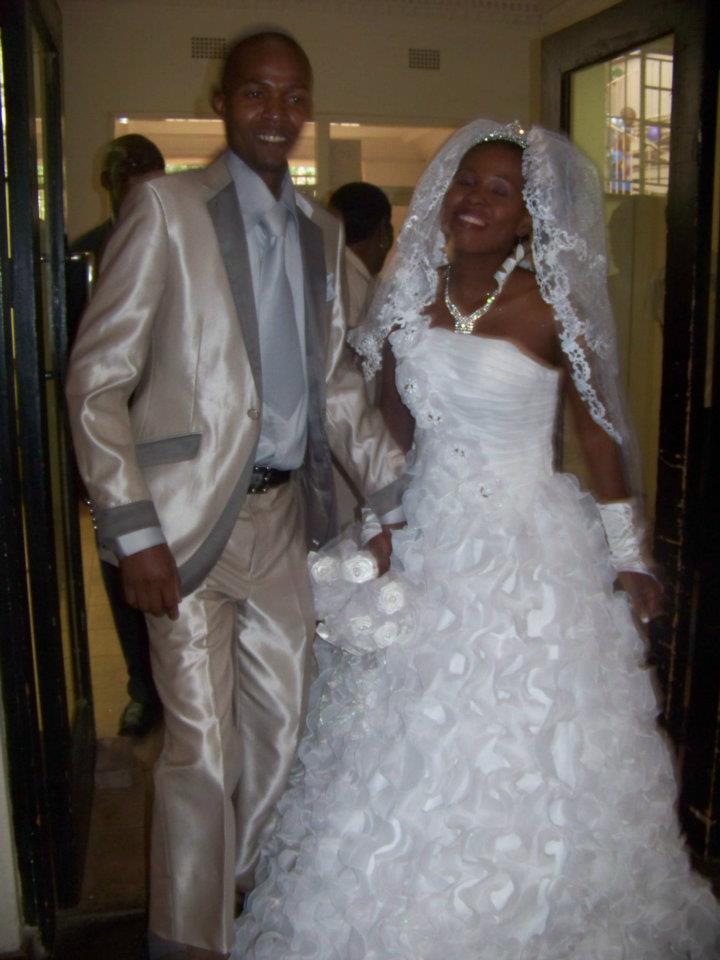
Happy African Faces!


Happiness is universal and infectious!

President Bingu wa Mutharika Sees Positive 2012

Malawi's President, Bingu wa Mutharika, sees Malawi's fortunes changing for the better in 2012.
This is indicated in his Christmas and New Year message to Malawians.
The President has since blamed Malawi's pressing problems- fuel shortage, forex shortage, power outages, drying donor inflows- on the devil.
Mutharika notes, however, that "Satan has failed..."
Analysts say Mutharika's speech is the hall-mark of the political blame-game that has characterised his regime since 2004.

Some Facts about Malawian Crops

Tea is grown extensively in Malawi, particularly in the South, and “is the second largest producer of tea in Africa after Kenya.
Malawi produced 41.6 million kilograms of tea in 2001, and the crop contributes, at least,7.9 percent of total export earnings.
Over 25 000 hectares of land is used for growing the crop in Thyolo and Mulanje districts, mainly grown for its green leaf which is processed into black tea.

Macadamia Nuts. Malawi produces an average of 5 metric tonnes of macadamia nuts every year, with the crop forming part of the country's crop arsenal.
The current total area for macadamia cultivation is 2,200 hectares, used for both small-scale and large-scale cultivation.
These nuts are taken from the field and, then, shelled and hulled through factory processing. These ( shell and hull) are the waste products, though experts say they have proven to be most effective in a thermal process due to their high calorific value of around 10 000BTU/lbs.

Tobacco: Malawi produced a record 124.7 million kilograms of tobacco in 2001, and the crop continues to account for 70 percent total exports and it has continued to dominate the trade returns for Malawi.

Maize: Maize is a staple food in Malawi so it is likely that current figures are relatively similar. This gives an idea of the quantity of maize that Malawians consume, especially as Malawi is generally a net importer of maize.
In the 2002/3 maize season, 1.983 million tonnes of maize was produced in Malawi and in the 2003/4 season, 1.733 million tonnes was produced.

Anonymous Yaps Lyric on Graig Sieben

thanks chilombo
for letting us know
you are really the ears and eyes of Malawi
uh uh
Of africa
Since I'm in Zambia for now
Thanks to sieben
It it good to have such a kind man in malawi
More especially at this time

....................................................................


END-NOTE FROM THE MODERATOR: Some say Chilombo. Others say Chirombo. There are running arguments that a name is a name, and should not be subjected to Grammar rules.

Talking of Grammar rules- Chichewa Grammar Rules, for that matter. It is standard practice in Chichewa that, when a writer faces the possibility of using the consonant "R' or "L' after either of the vowels 'E' or 'I', the correct consonant is 'R'.

Chichewa Grammar Rules also dictate to us that if a writer is faced with the possibility of employing the consonants 'L' or 'R' in a sentence, the best consonant to use after vowels 'O', 'U' and 'A' is L.

Therefore, 'L' should be used (as a Chichewa Grammar thumb-rule) after 'O', 'U', and 'A' as a matter of necessity.

Likewise, 'R' should be used after 'I' and 'E' all the time.

Taking these factors into consideration, my surname is 'ChiRombo' and not 'ChiLombo'.

I must admit, though, that my younger brother uses the surname 'ChiLombo' and not 'ChiRombo'.

My two sisters have gone a step further; they don't use the name 'ChiRombo' at all and, instead, prefer our clan name 'Phiri'. They. thus, call themselves 'Phiris'.

Of course, Phiri is a good name- especially for a Ngoni like me. Whenever I go to my home village in Dedza, old women are always happy to see me, and pave the way for me, while clasping their hands (Ngoni-style): Dutsani we Phiri! (Pass ye, pass ye- Mr. Phiri).

That is why it is great- so great- to be a Malawian!

By the Way, Let Me E-Mail Graig Sieben

And Learn about Progress and His Where-About.

Oops! I have left his business card at home.

That means it's tomorrow!

Friday, December 23, 2011

Remembering December 1, 2011: Graig Sieben arrives in Malawi

South African citizen Graig Sieben, who started walking on foot and
hitchhiking from Pretoria in South Africa 77 days ago, and plans to
reach Egypt’s Capital City, Cairo, by April 26 2012 in a campaign
aimed to raise awareness about the plight of people with disabilities
in Africa, arrived in Malawi on Monday.
Sieben, who has dubbed his sojourn the ‘Walk4Wheels’ campaign, plans
to pass through 15 countries within 222 days- covering a total
distance of 16,000 kilometres.
After arriving in Lilongwe on Monday, the philanthropist walked and
hitch-hiked to Blantyre, where he arrived on Wednesday. He was on his
way to Mulanje as we went to press on Friday, and plans to return to
Blantyre and pass through the Lakeshore road on his way to Egypt
through Tanzania.
Speaking in an interview on Thursday, when he visited Malawi against
Physical Disabilities (Map) premises in Blantyre, where he donated a
wheelchair worth 7,000 Rand (about K140, 000) using the money he has
fundraised, Sieben said he was saddened with the challenges faced by
people with physical challenges in Malawi.
“Although I would say I am happy that I am in Blantyre on the 75th day
of my journey, I am sad to note that physically challenged people face
a lot of problems, most of which hinge on resource constraints. The
situation in Malawi, and most African countries I have passed through,
is not very different from that of South Africa,” said Sieben.
Sieben, who has already been to South Africa, Botswana, Zimbabwe and
Zambia and wants to raise enough money to purchase 222 wheelchairs,
said he decided to embark on his campaign after being touched by the
plight of a 17 year-old South African girl called Chaeli some five
months ago.
“Chaeli, who has just won an international peace prize, developed a
health condition that made her lose her ability to walk. However, she
and her relatives did not have money for a wheelchair, and this forced
her to launch a public appeal for a wheelchair,’ said Sieben.
Chaeli soon found the wheelchair but donations kept coming in, said
Sieben, a development that prompted Chaeli to launch the Chaeli
Campaign- a Cape Town-based Non Governmental Organisation (NGO) that
focuses on mobilizing the minds and bodies of children with
disabilities.
This, according to Sieben, makes the Chaeli Campaign the only NGO in
the world to be duly registered by children between six and 12 years
old. The NGO now runs other initiatives such as the Therapy programme,
Inclusive Education programme, Pay-it-Forward Ambassadors programme,
and Chaeli Sports and Recreation Club.
Speaking after the wheelchair presentation ceremony, Map
Rehabilitation Services Manager, Alex Dzinkambani, said it was
disheartening that people with physical disabilities in Malawi have to
rely on foreign nationals for help, “when we, as Malawians, can do
equally well by donating such things as wheelchairs and crutches”.
Dzinkambani said Map currently has 2000 people who need wheelchairs
and tricycles.


“The demand for wheelchairs, tricycles, calipers, baby-walkers,
walking frames and crutches is huge. This is so because we help about
10,000 people every year,” said Dzinkambani.
He added that some wheelchairs also needed replacement, since a
wheelchair’s lifespan is 10 years.
Map started giving out wheelchairs in 1970, and helps rehabilitate
people with physical challenges at its four centres in Blantyre,
Lilongwe, Rumphi, and Zomba. It needs K300 million annually to
carry out its activities, but has received on K100 million to run its
operations this year.

Three ideas for economic democracy and economic success

...Employee directors, union pension funds & staff share bonuses
Peter Tatchell
Britain is in the midst of the biggest economic crisis since the 1930s depression - a crisis that has been dragging on for the last four years. Even now, politicians are offering no clear solutions; just tinkering here and there with minor adjustments to a failed system.


We've got to get out of the current mess and take steps to prevent a repeat economic disaster in the future. One way of doing this is by ensuring greater economic democracy - more participation, transparency, decentralisation and accountability in the way the economy is run.


We expect political democracy, why not economic democracy too?


There are still insufficient checks and balances on big business. We can't carry on as usual, with the system that caused the present meltdown.


Britain needs solutions that can secure economic stability and success, together with social justice and the public good.


There are three proposals for economic democracy that are worth considering: industrial democracy and co-determination in the boardroom, trade union administration of their member's pension funds and share bonuses to reward employees for greater productivity and profitability.


First, a system of industrial democracy, based on the German model but better. This would require the boards of all private and public enterprises with 50 or more employees to establish equal representation and joint control between management and elected staff representatives; creating a partnership between the two constituents of economic success: capital and labour.


Under an independent chairperson acceptable to both sides, these boards with employee representatives would have full access to all corporate information and the final say over all corporate decisions, including investment, technology, wages, prices and so on. This system of economic co-determination would apply to private companies and also to public bodies like the NHS and local councils.


The result? A form of workplace democracy. This would shift the balance of economic power; constraining the remit of capital and expanding the influence of employees; forging a more co-equal partnership. This would be fairer and would also be good for the economy because shop floor worker directors could offer independent oversight of corporate operations and bring to the boardroom practical, often cost-saving, insights from their direct day-to-day, hands-on experience.


Not motivated by the profit motive and private gain, they would be more likely to blow the whistle on reckless risk-taking and on decisions that damage the consumer and the environment. Having employee directors would also ensure that disputes got addressed and solved quicker; leading to more harmonious industrial relations and to improved productivity. This would be good for individual enterprises and for the whole economy.

Second, trade union control of their member's pension funds - the value of which totals around £900 billion. This is a way to decentralise, diversify, and democratise the economy.


It could be accomplished by legislatively re-assigning the administration of pension fund assets to financial experts appointed by, and accountable to, individual trade unions who would act as trustees of the funds on behalf of their members all across the country. Or, alternatively, the funds could be placed in the hands of a regional union pension fund, acting for all the trade unions and their members in a particular region. This would localise and decentralise investment decisions and allow the funds to be used to meet particular local and regional needs.


Either version of this pension fund scheme would give employees direct power over a massive wedge of public and private investment capital; amounting to a third of the entire stock market.


It could then direct these funds into specific investments corresponding to the interests of union members and to broader social and environmental needs, such as the development of renewable energy and the conversion of arms industries to socially-useful civilian manufacture.


With unions more likely to be mindful of ethical issues, their pension fund investments would be less likely to be directed to speculative, get-rich quick portfolios. These tend to be bad for the economy, so this might be a way to ensure wiser, more moral investments that are also better for the economy.


Third, the progressive transfer of share ownership into trade union-administered employee share funds. This idea is a variation on the 'wage-earner funds' proposed by Rudolf Meidner of the Swedish trade union federation, the LO, in the 1970s.


It would obligate all private share capital companies to assign to a union-controlled employee fund a proportion of their annual profits in the form of a new share issue. This scheme would gradually, over many decades, give employees, through their unions, a controlling interest in their firms - eventually transforming them into self-governing workers' co-operatives. The great strength of this scheme is that it incentivises and rewards employees for economic success, which is good for the economy. The more productive and profitable a company, the more shares it has to issue to the employees' fund and the sooner employees gain a controlling stake. They have an incentive to work hard and contribute to their company's success.


In contrast to the traditional reformist economic doctrines of Keynesianism and Welfare Statism, which merely seek to redistribute wealth more fairly within the confines of the existing free market, private ownership system, these three ideas for economic democracy are mechanisms for the structural transformation of capitalism. If implemented, they would alter, fundamentally, the distribution of wealth and power, in favour of employees and the wider public. And they'd help rebalance, stabilise and reinvigorate the economy. It's plain commonsense.


We need both radical and practical solutions to the economic crisis - a crisis that has arisen, in large part, from concentrated and unaccountable economic power. This means challenging the system of economic dictatorship by the mega rich and setting out a new model of economic participation, accountability, decentralisation and transparency. The interests of employees, consumers and the wider public welfare demand it. The time for economic democracy is now.

Thursday, December 22, 2011

Think of The Poor: CfSC Statement on The Current Economic Slowdown.

It is no doubt that Malawi is facing an economic slowdown. That Malawians are struggling to make ends meet due to the current economic turmoil is now a mutually agreed fact. In his “Statement on the Status of Economy” in Parliament, the Minister of Finance Honourable Dr. Ken Lipenga, MP indicated that the economy would slowdown by 0.9, from 6.9% to 6% in the current fiscal year. The International Monetary Fund (IMF, 2011) projections paint even a grimmer picture, hinting that the economy will grow just by 2% compared to a 6% growth rate the previous years. Equally, the Minister of Foreign Affairs Honourable Peter Wa Mutharika, MP during a mass rally in Mzuzu, acknowledged that “the country is going through an economic crisis” albeit attributing the crisis to global trends. All these assertions, though a good development, fall short of inspiring hope among Malawians because government has not yet outlined clear and prudent policy prescriptions to bring the economy back on track.

Proposals to borrow money from foreign banks in a bid to boost forex import cover to solve the fuel crisis, suggestions to further re-align the kwacha to reflect its true market value, proposition to further hike fuel prices and a contentment to perpetuate a taxation regime that hits the low-income earners harder remain artificial moves, as they do not address the underlying issues affecting the economy. Actually, such measures only postpone problems to future generations which will eventually bear the brunt. Malawi ought to create a positive economic environment influenced by improvements in macroeconomic policies and structural reforms. The estimated growth equation indicates that per capita real GDP growth is positively influenced by economic policies that raise the ratio of private investment to GDP, promote human capital development, lower the ratio of the budget deficit to GDP, avoid overvalued exchange rates, and stimulate export volume growth. Of vital importance is also the promotion of alternative sustainable eco-friendly sources of energy. In the absence of these, promises by the Minister of Finance that 2012 will be a good year may be conceived as aspirational.

Great uncertainty exists as to what policies can and should be pursued in the context of the current crisis. People need solutions to the problems they are in. Parliament, currently sitting, should seize the opportunity to ask profound questions pertaining to the values and priorities to be adopted to guide the nation through these difficult times. What future do we want to emerge from the current crisis? What choices need to be made now to ensure that such a future will come about? What values will shape this period of our history – those that represent self-interest and sectional concerns, or those which reflect the common good and the protection of the weakest?

The recent UNDP Human Development Index Report (HDI, 2011) which measures “the expansion of people’s freedoms and capabilities to lead lives that they value and have reason to value” has ranked Malawi at 171 from 153 in 2010. The slump in the index is largely attributed to more countries entering the index this year; however an analysis of the movement of the actual indices reveals that Malawi has not registered much progress in view of the county’s economic growth for the past years which was at 6%. According to the Programme Officer for Social Conditions Programme, Mr. Alex Nkosi, “This means that the economic gains that Malawi has garnered in the recent past are not making a real dent in the pervasive poverty to enable significant improvements in social conditions.” Correspondingly, the Centre for Social Concern (CfSC) Urban Basic Needs Basket for November shows that the cost of living on essential food items continues to skyrocket. CfSC has noted that in the month of November 2011 certain products in the food basket like Maize, Beans, Usipa, Utaka, Kapenta and Bread have increased tremendously from the previous month, while others have maintained or slightly gone up.

For instance, the price of maize has surged upwards tremendously. Mzuzu, the hardest hit, has witnessed an average maize price rise by 28.2% (K2, 200 per 50kg bag) in November as compared to average price in October which was at K1580. On average, the same trend has been observed in all the major cities: in Lilongwe it went up by 11%, Zomba 13% and in Blantyre maize registered an increase of 10%. Most sellers in the market attribute the increase to scarcity of the commodity and an increase in the cost of transportation.

In Zomba the price of bread has gone up by 27.8%. In October (on average) a loaf of bread was at K153 and in November it went up to K212. The survey has revealed a similar price tendency in Blantyre, Lilongwe and Mzuzu where prices have gone up by 25%, 20% and 11.4% respectively. According to Bread Bakers, the price increase is attributed to an increase of wheat flour (most of which is imported) and transportation costs in delivering the commodity. All in all, the average cost of the CfSC food basket for a family of six rose by 10.9% from K29, 470 in October to K33, 107 in November. The average total Basic Needs Basket comprising food and no-food items for a family of six for Mzuzu, Lilongwe, Zomba and Blantyre has increased to K61, 778 in November from K57, 407 in October, 2011. Of great concern is the rise in the price of maize, a staple food for Malawians and bread, a commodity mostly used by urban dwellers.

These are figures. But behind the statistics are millions of lives of Malawians that are struggling to eke-out a living. As Alex Nkosi observes, “The increasing gap between people’s income and the cost of living invokes a question as to how poor Malawians are making ends meet. As the figures indicate; the obvious consequence of the rising costs of food items is that the purchasing power of low-income and middle-income consumers continues to deteriorate resulting to diminishing levels of disposable income. Lack of disposable income has adverse effects on the economy since its people’s ability to spend that stimulates the market. Being a rainy season, low-income earners will be hit hard by this sharp rise in the cost of living because most households will have to buy farm inputs in the midst of nonexistent disposable income”.

“Now, more than ever”, asserts Mr. Nkosi, “we need to reassert the importance of the value of uMunthu - social solidarity, fairness, and compassion. We need to see ourselves as citizens with a shared responsibility for the common good. And most significantly as servants of the people, our politicians must recognise the symbolic importance of their being willing to sacrifice some of the considerable financial benefits they enjoy, in a context where millions of Malawians are unable to meet their minimum food requirements to live a dignified life. Forfeiting the proposed unprecedented salary increase for the MPs would be a good gesture in the right direction!”

For more information and feedback, please contact:
Alex Nkosi,
Social Conditions Programme Officer
Center for Social Concern, P.O. Box 40049, Lilongwe, Malawi
Tel: 265-1-715-632 Fax: 260-1-716-136 E-mail: alex.nkosi@cfscmalawi.org or alexnkosi@yahoo.com / cfsc@malawi.net
Location: Next to St. Francis Catholic Parish, Area 25C, Kanengo Website: www.cfscmalawi.org

Wednesday, December 21, 2011

HIV-Positive Man Sprayed With Lysol at Work

James White's lawyers in Michigan call his case "the worst case of HIV discrimination we've ever seen." It's hard to believe how much James had to endure:

...When James disclosed his HIV status to his boss at a Great Expressions Dental Center -- where James worked as an office assistant -- James' boss told everyone in the office that James had HIV.
.For months, James' coworkers followed him around with cans of Lysol. They sprayed James, refused to let him touch doorknobs, and wiped down furniture after he touched it.

...James was finally admitted to the hospital to deal with the toll of months of stress from the situation at work -- he was diagnosed with Post-Traumatic Stress Disorder.

...On his last night in the hospital, James got a call saying that he was fired.

Jim Harris is a junior at the University of Oklahoma who has dedicated his time on campus to educating his fellow students about HIV. When Jim read about what happened to James, he was outraged -- so he started a petition on Change.org demanding that Great Expressions Dental Centers apologize for how James was treated and pay him reparations.

The Equal Employment Opportunity Commission attempted to mediate this situation, but Great Expressions refused the proposed settlement. So the EEOC gave James a letter supporting his right to sue Great Expressions -- but a lawsuit will be costly and could take years.

James shouldn't have to wait years for an apology or compensation. Great Expressions is a large chain of dental centers, with locations in seven different states -- bringing large-scale public pressure is exactly the right way to force a quick resolution rather than letting the company wait it out and hope James runs out of money.

Now, People are asking Great Expressions Dental Centers to apologize and pay reparations for the egregious treatment of James White.

Malawian Media Practitioners Take Their Turn for The Camera

Inside Cyprus' Migrant Detention Centres

By Giorgos Kosmopoulos, Amnesty International’s Greece and Cyprus campaigner

Hundreds of migrants awaiting deportation from Cyprus are being held for months in squalid conditions with limited access to legal and medical aid.

A few muted rays of light seep through the barred cell windows of block ten of Nicosia’s Central Prison.

Not many miles down the road, a light breeze sweeps over long sandy beaches and tourists wander at their leisure, free to enjoy the fresh air and winter sunshine.

Nicosia's Central Prison is used as a detention centre for rejected asylum seekers and migrants ©Amnesty International

But inside Nicosia’s prison, the air is stuffy and the scruffy walls reverberate with the sounds of heavy doors being slammed shut and shouts from staff and detainees. Arabic music blares out from a television set.

For several years, two wings of the prison have been used as a detention centre for rejected asylum seekers and migrants awaiting deportation.

Up to three people sleep inside the draughty, minute cells. Some of the cell windows are broken and inmates have stuffed pieces of cloth in the gaps to prevent cold air from entering.

At the time of our visit in early December, some 56 migrants are being held in the prison. About 200 migrants – most of them from sub-Saharan Africa and the Middle East- are currently detained in Cyprus, a considerable number for such a small island. Even though the application numbers have recently fallen dramatically according to the UNHCR, Cyprus ranked first among 44 reviewed countries as regards asylum applications per inhabitant.

Sitting by a table next to the only window in the room , we meet Osman Kane, a Sierra Leonean migrant who has spent the past eleven months inside block ten of the Nicosia prison.

During Sierra Leone’s decade-long civil war, Osman worked as a chauffeur to the wife of the leader of one of the warring parties, he says.

Because of his job, he was tortured and persecuted by supporters of the opposition, he tells me. He fled the country, and arrived in Cyprus in 2000.

He applied for asylum, but in 2005 his file was closed after the authorities claimed they could not locate him to examine his claim.

During a few short periods of freedom, he was often left destitute and forced to take illegal work.

A few months later he was arrested and a total of five failed deportation attempts took place over the next three years, most of which he spent in detention in block ten.

In August this year, Osman challenged the legality of the length of his detention before the Supreme Court of Cyprus.
He won, and the court ordered his immediate release. He thought he was free at last but before even leaving the court premises he was arrested and detained once again.

His morale and his faith in justice were shattered, he says.

‘’In 2000, I was tricked by smugglers to believe I was safely in a European Union country’’ he adds.

“Now I have been tricked again, this time by the authorities. What is there left for me to do?’’, he asks.


Amnesty International raised its concerns with the Cypriot immigration authorities regarding the legality and the length of his detention already in 2007.

Amnesty International delegates visited three different detention facilities on the island and almost every detainee we talked to, spoke of lack of legal aid, poor conditions and insufficient medical care.

Bawa Kerimu is from Nigeria and has been in block 10 for over four months.

He claims he gradually lost his sight while in detention. The doctors wrote something in Greek on his papers, but he currently receives no adequate medical care, just some eye drops.

He described to me how his eyes swell up; he is often unable to sleep for days on end and moving around feels like torture. During our interview it was evident that he couldn’t really see me, for him I was only a blurry shape asking questions. He now fears that he will be blind for the rest of his life.

Amnesty International is urging the Cypriot authorities to fulfill their international obligations and respect the rights of asylum seekers and migrants.

The organization believes that detaining migrants for deportation should take place only as a last resort and only after other less restrictive alternatives to detention have been explored.

If detention takes place, effective safeguards should be in place and adequate medical care must be ensured. Those who cannot be deported must be released.

Refugees tell of bombing in Sudan’s Blue Nile State: Part 2

By Donatella Rovera, Amnesty International’s Crisis Researcher & Khairunissa Dhala, Amnesty International’s Campaigner for Sudan & South Sudan

The Sudanese government is keeping Blue Nile State closed off to human rights NGOs and aid agencies, including the UN.


The closest we could get to Blue Nile State was New Guffa, a village in South Sudan, near the Sudanese border. Air strikes by the Sudan Armed Forces (SAF) around the village have displaced hundreds of residents.

On the outskirts of New Guffa, we found the small hamlet of Yafta completely deserted. Sudan People’s Liberation Army (SPLA) soldiers reportedly lived in Yafta with their families, and fighters and refugees from across the border had stopped in the village after crossing over into South Sudan.

Outside the village we found one family still living there. Elia Omar, a father of four, told us that he and his family would run to hide in the bush whenever they hear the noise of the SAF Antonov aircrafts circling in the sky – a regular occurrence he said.


He showed us the location of an air strike near his home – one of several cross-border strikes launched by the SAF into South Sudan between late September and mid-November this year.

Twenty minutes’ walk towards the border we saw the locations of other air strikes. At each site we saw a large hole, pieces of shrapnel, and trees all around lacerated by shrapnel. We saw fresh graves nearby.

We were told that several people had been killed in recent strikes. Some were residents of the village, others were refugees, and some were SPLM-N fighters who had come across the border with the refugees. A refugee couple and their young child from Kurmuk, in Sudan’s Blue Nile State, were reportedly killed in an air strike in the afternoon of 27 October. Three SPLM-N fighters were also reportedly killed by another strike in the morning of 9 November. It was after this strike that the villagers fled.

Around New Guffa hundreds of refugees from across the border in Sudan’s Blue Nile State are now sleeping out in the open. Some are resting before resuming the long walk of several days to reach the refugee camp at Dorro, just outside the small town of Bunj. Others, mostly the elderly or disabled, are waiting in the hope that someone will send a vehicle to fetch them.

Hangouk Hooba, a man in his sixties from Kolnugra village near the town of Ura in Sudan had arrived at the Dorro camp with his family two weeks ago. They carried whatever food they had at home and took their goats with them. It had taken them three weeks to reach the camp.

He told us that he had been cultivating his crops in the fields when he heard an Antonov fly overhead and drop four bombs. When he got home the village was in chaos with people running in all directions in fear. Three bombs had dropped on the outskirts of the village, and one lay unexploded near the bridge.

The villagers decided that it was no longer safe to stay in the village. They hid in the bush outside the village and that night they went home, packed whatever they could carry and left.

Litia Shabe, a 40 year old woman at Dorro camp said that she fled Sudan for the South because she didn’t want to die. She is from Jindi, a village south of Kurmuk, the former SPLA-N stronghold in Blue Nile State. She said that she had been hearing bombings around the village and was afraid. In mid-November on a Friday afternoon, her fears came true. Two bombs fell in Jindi village causing hundreds to flee, including Litia, her husband and their seven children. They walked for days to reach the refugee camp in South Sudan.

Mandy and her mother Fayza Rubat fled their village in Sudan with nothing ©Amnesty International

Fayza Rubat, a 29-year-old mother of four also from Jindi, told us that her husband, a fighter in the SPLA-N, was killed in the fighting three months ago. Six weeks later, as the fighting and the bombing intensified around Jindi, she decided to leave for the South, taking nothing with her as she had to carry her young children.

At the refugee camp registration point we met 32-year-old Jubara Atum, who had just arrived from Mayek, a village west of Kurmuk in Sudan. He said that two weeks earlier, as an Antonov plane was circling over Mayek, he ran to the bush to seek shelter with his family. He heard the bombs falling nearby and decided to stay in the bush for the next 14 days. Since the situation continued to deteriorate, he decided not to return to Mayek and crossed the border to the refugee camp, leaving all his possessions behind.

In Dorro camp many refugees have received some humanitarian assistance, and some food distribution has begun in the last few days. However, while waiting for food aid to arrive, some refugees told me they had been selling some of the aid items they received such as buckets and soap, to raise money to buy food.

Sanitary conditions are dire; there are few latrines or water points, and women –are queuing for hours for water. Some refugees have put up flimsy shelters made of straw, cloth or plastic sheets (the latter provided by UN aid agencies), and others are sheltering under the trees.

For now everything about this new refugee camp is temporary, but some humanitarian organizations here are preparing for the long haul. They may be right. Most of those displaced by the various conflicts in Sudan in recent years are still living in camps in neighbouring countries or in Sudan itself

Refugees tell of bombing in Sudan’s Blue Nile State: Part One

By Donatella Rovera, Amnesty International’s Crisis Researcher & Khairunissa Dhala, Amnesty International’s Campaigner for Sudan & South Sudan

“Because of the bombing” is what every single one of the refugees told us when we asked why they had fled their homes. In the past few days we have been meeting the refugees displaced by repeated Sudanese army airstrikes on their towns and villages in Sudan’s Blue Nile State. They are now sheltering in South Sudan’s Upper Nile State.

More than 20,000 have fled their homes since the conflict broke out between the Sudan Armed Forces (SAF) and the Sudan People’s Liberation Movement/Army – North (SPLM/A-N) on 1 September this year.


They have fled with nothing but a small amount of food for the journey, because they had to carry their children and help their elderly or disabled relatives.

Refugees have walked for days to reach a hastily set up camp in Dorro, just outside the poor and isolated small town of Bunj in South Sudan, which does not even have the most basic services for its own population.

Until the arrival of the refugees there was not a single doctor in the town’s small and dilapidated hospital. For Bunj’s 60,000 people, the nearest hospital with doctors is in the town of Renk, five hours by road in the dry season and considerably longer in the rainy season. Now there is one doctor, who arrived a few weeks ago with the refugees from Blue Nile State.

When we met him he was busy installing a sink in one of the hospital rooms which will be used as an operating theatre. He was pleased to have received a bed, donated by an international humanitarian organization, which will serve as an operating table. Until now he has been operating on patients on a stretcher. In the hospital ward some of the patients, many of them soldiers injured in the conflict, were lying on thin straw mats on the floor due to lack of beds or space.

Ayub Dan's wife was killed and his two daughters were injured during the bombing of Sudan's Bellatuma market ©Amnesty International

Near the refugee camp on the outskirts of town, at a small clinic whose entire medical personnel consists of a single nurse, we met Ayub Dan. His wife Marta, a 27-year-old mother of seven, was killed on 10 November in an air strike in Bellatuma village in Sudan’s Blue Nile State.


Ayub said: “I was at the market with my wife but was in a different part of the market when the market was bombed. We threw ourselves on the ground when we heard the Antonov above. It was panic.”

“When I found my wife, she was lying on the ground face down and was dead; a large piece of shrapnel had gone through from her back to her chest.”

“ The plane dropped several bombs; I counted 12, three each time it flew over and it flew over four times – back and forward twice”.

With Ayub in the camp were two of his daughters, six-year-old Manasia and 14-year-old Barshiba: both were injured on the same day in another air strike near their home in the nearby town of Yabus.

Barshiba told us that while her parents were away at the market, she and her siblings at home had heard the sound of an Antonov place circling above, and had run out of their hut into the nearby fields where they were struck by shrapnel. Manasia sustained serious wounds to her left armpit and chest and Barshiba had part of her right buttock sliced off. Both require medical care that is not available in Bunj.

At the same clinic we met other civilians who were injured in the air strikes on Bellatuma market. Juma Markan, a 30 year old mother of seven, told us that she was at her home near the market when an Antonov flew over the village four times and dropped 12 bombs.

She lay down on the floor, with her one-year-old child clinging to her chest. A piece of shrapnel went through the thatched roof of her hut and cut through her back. She could not move and spent the night in her house until a relative found a car and took her to Marinji village, where there was a clinic. She spent one week there until she was taken to South Sudan to the Dorro refugee camp at Bunj.

When we met her, her back was covered in bandages and her wounds infected. She too needs medical care which is not available at the clinic. Her husband and children are still in Bellatuma and she is waiting for them to come to the refugee camp.

10 yr old Piney Bana was one of the civilians hit by shrapnel during the bombing of Bellatuma market ©Amnesty International

Bana Dau told us that he and his ten year old daughter Piney were at the market selling roasted meat when they heard an Antonov overhead. He told his daughter to lie down. Shortly after the explosions Piney started crying and blood was soaking through her clothes. She had been hit by a piece of shrapnel in her back. He carried her home and got neighbours to take them to the clinic in Marinji village. They then travelled across the border to the refugee camp.

According to what these and other survivors of the attacks told us, the bombing of Bellatuma market killed nine civilians – five women, two men and two children,.

We cannot go to Bellatuma or anywhere else in Blue Nile State to investigate further, and neither can anyone else. The Sudanese government is keeping the area closed off to international human rights and humanitarian organizations and to UN aid agencies.

In part 2, we try to get closer to Blue Nile State to gather more information by travelling to a South Sudan border village that has been under cross-border attack from the Sudanese Armed Forces.

Pix: Amnesty International

Defiance in the face of repression on Iran’s Student Day

By Drewery Dyke, Amnesty International’s Iran researcher

To mark Iran’s National Student Day on 7th December, a letter from imprisoned student Majid Dorri has been smuggled out of Behbehan Prison in southern Iran. In it, he says:

“16th of Azar [7 December] is a day when the university stood against oppression; it stood and gave martyrs; it stood and was dragged over the ground and through blood; but it did not leave, it stayed; it trembled but it did not surrender; it was weakened but did not bend.”


Student Day marks the killing of three students by police in 1953. On this day every year, Iranian students hold demonstrations and gatherings calling for reforms. They refuse to be silenced by the ever-mounting tide of repression.
In 2009, hundreds of students were arrested, and scores later imprisoned, in the wake of disputed Presidential elections. Yet the student movement is still – somehow – campaigning, even from behind bars.

Prisoner of conscience Majid Dorri has been serving a six-year sentence since 2010 and was permanently banned from ‘Allameh Tabatabai University in July 2011.

Since the election of President Ahmadinejad in 2005, amid rising levels of repression against the reformist student movement, the university files of scores, if not hundreds, of students have been given ‘stars’. These stars are not gold for achievement, but black marks for expressing dissatisfaction with the authorities. Those with three stars are expelled and banned from further education for good.

At least 100 students are believed to have been given lifetime bans from university due to their activism in 2011 alone. At least 58 students were reportedly banned in 2009, and another 70 in 2010.

The new Empty Seat Campaign (http://www.facebook.com/Empty.Seat.Campaign) draws attention to missing students. These include those killed during the 2009 unrest, those who have been banned or those who are, like Majid Dorri, still in prison.

The rallying cry of ”Where is my vote?“ that swept the country after the 2009 election is echoed in the Empty Seat Campaign’s slogan: ”Where is my classmate?“.

Independent student and graduate associations continue to be banned in Iran. Like Majid Dorri, their imprisoned members have often continued to fight against the conditions of their detention and speak out on human rights – including on Iran’s Students’ Day – to their own detriment.

Mahdieh Golrou, former vice-president of the ‘Allameh Tabatabai University’s Islamic Association, was due to be released after two years in prison when she was sentenced to an additional six months. She had been convicted on new charges relating to a joint statement she released with two other detainees on last year’s National Student Day. Her two co-signatories – student activists and prisoners of conscience Behareh Hedayat and Majid Tavakkoli – have also had the same additional sentence imposed, bringing their total prison terms to ten and nine years respectively.

Spokesperson for Iran’s Graduates’ Association, Abdollah Momeni – already serving a five-year prison term – was also charged afresh this year with “propaganda against the system” and “causing unease in the public mind” in relation to a September 2010 open letter he wrote to the Supreme Leader Ayatollah Khamenei describing his arrest and interrogation.

In the letter, he wrote of being tear-gassed, beaten, threatened, held in solitary confinement, having his head pushed down a dirty toilet bowl so that he ingested faeces, and being forced to eat his interrogation forms during the fasting month of Ramadan.

Uneasy reading indeed – and sadly only one of many such testimonies. The ongoing repercussions of Abdollah Momeni’s letter show not only that imprisoning student and graduate leaders has failed to bow the spirit of prisoners, but also how the Iranian authorities resort to further repression to cover up their torture and ill-treatment of detainees.

Another year’s National Student’s Day has passed with too many “empty seats” on university campuses across Iran. We are again calling on the Iranian authorities to free all student prisoners of conscience and lift the lifetime bans on study. Nowhere should there be another Majid Dorri, writing from prison that:

“… this is my final message as a student, [because] I have been expelled; I have been driven out from your realm … I am no longer a student, but give [you] a message, to say what is in my heart, even though [I am] a ‘starred student’, deprived of education.”

Picture: Empty Chair Campaign

Tuesday, December 20, 2011

POEM: Ex-girl friend

By Richard Chirombo
At the accident scene lay a lifeless picture,
More intact than the frame of its fallen beauty who,
Like the broken glass which, on the unconsenting road, made for its pieces a home,
Had, by the impact of the collision, been broken into perceived glasses of immortality:
A passenger stripped of luggage and citizenship;
Oh, forsaken by hope, wishes, and intimacy, too-
Which intimacy the sobbing and shaking man,
With that ‘survivor’, intact picture in two unstable hands,
Pressed against his broken heart,
A dozen inches below that big, open, toothless mouth-
Had mercilessly been denied
Under the pile of two dozen rains!
That had injured him, the bachelor neighbour, so deeply then
He vowed never to see her again
Or maim her if chances so permitted,
And make her his own.

Now, looking at the ownerless picture,
Whose being had, in real time, him- then a young, handsome, hot-blooded virgin man,
A merciless batterer of the dead, global animal skin- rebuked in the rudest of manners:
“She twisted her lips like a broken bicycle rim;
No, that was bad-
Why get the eyes’ whites so prominently out,
And not the tears women are renowned for?
Why look towards the sky,
And my eyes not?
What is she afraid of?
Afraid that she may behold the invisible tears washing down my heart?
Idiot!
Coward!
Foolish woman!
Rounded like M’bona’s Khulubvi shrine!
Who does she take herself for?
Well, one day we shall see,
I will pluck those eyes out!”
That’s what the young man had said,
Promising to get even with the warmly lady and not this orphaned picture;
And darkness matured into day, and days collapsed into nights,
As the patient man waited for his sunny day,
This rude woman to maim,
And make her his own!

“Are you sick, Police Commissioner?” the junior police officer asked his toothless boss,
Surprised that, instead of saving the dozen surviving commuter bus victims,
The boss found sense in saving a mere picture, holding it hard against his restless chest!
So helpless had the boss become, he threw his official battle stick and cap aside,
And washed the lifeless picture with his own tears;
White tears dropping from those red-shot eyes,
Eyes that, in forty years of law enforcement, had many a criminal cowed into countless confessions
And, for the sobbing cop, countless promotions earned!
What? Everybody knew that it was on account of those eyes, and not qualifications, that the Police Commissioner got his invisible feet up the progression ladder.
On that account, red-shot eyes, he dribbled his tea-burnt tongue around the invincible walls of his present-wife’s resistance to love overtures;
In fact, it was not only one woman on whose head he got his name pasted,
He wagged his tongue into three hearts, and got his bidding

“Who is sick?” he had shot back, always quick to hide his emotions in tough talk.
Fellow officers, he shot with intimidating questions.
Criminal suspects, he shot with his eyes-
Static criminal suspects, that is;
The clever-legged he shot with live ammunition-
A man of ‘shooting’ habits,
His relentless wife he ‘shot’ with the pocket,
Leaving no money for relish to shoot her stubbornness down,
Whenever she ‘handcuffed’ her own legs with muscles,
Pulling them together by sheer will,
And, then, hiding the two folded legs,
In the two-decades old red pair of bed sheets,
Their companion since Ground Zero in marriage!

Clasping the warmth-stripped picture,
The Police Commissioner asked to be excused from the accident scene,
Overridden by the desire to see the cold less picture in his marital bedroom,
And, then, from the sheer satisfaction of discovering his youth hood tormentor,
To pieces his tormentor’s picture tear,
And the beautiful- lady-now-fallen, into bits, pieces and fragments of fading memories turn
Food for enduring anger.
The heart-arrest happened as the police officer- a scissors and waste- bin having prepared-
Was looking at his youth hood tormentor’s picture for the last time.
It fell, the side with the accident victims’ face facing the roof,
On his bare, hairless chest
Immediately sticking to the sticky liquid that was tears and saliva,
Next to his erect, traditional iron spear,
That always stood there, an inch from his feet.

His wife, their two months-old daughter warmly cuddling
Bounced into the room two hours later and- upon finding his husband to his chest a picture so affectionately hold, angrily asked:
“You said you loved nobody else but me!
You said you loved me!
Idiot!”

Then, her mouth with both hands touching,
Forgot she the one-and-a-half year baby in her hands,
And the baby’s head, on the forgotten spear smashed,
One more food for mortality;
In all it became, at the first count, two warm bodies in tribute to one cold, old picture.

Saturday, December 17, 2011

Thanks Incontinent Pads!

Good you visited us!

Trade Unionism in Malawi


The Relationship Between 1981 and 2005

MODERATOR'S NOTE: ORIGINAL SOURCE UNKNOWN

In 1981:
1. Prince Charles got married.
2. Liverpool crowned soccer Champions of Europe .
3. Australia lost the Ashes.
4. The Pope died.


Then, in 2005:
1. Prince Charles got married.
2. Liverpool crowned soccer Champions of Europe .
3. Australia lost the Ashes.
4. The Pope died.

Lesson to be learned:
The next time Charles gets married, someone should warn the Pope

Pro-Islam Ads Withdrawn in US

Last week Lowe’s Home Improvement pulled its ads from the TLC show All-American Muslim in response to an organization claiming the show "falsely humanized Muslims in America.”
The Lowe’s controversy has exposed more Islamophobia in America. This issue falls directly in line with what the My Fellow American project is trying to prevent and overcome in America.

For more information, please visit www.myfellowamerican.us to share what this controversy means to you?

It is important to promote and spread the message of tolerance to fight back against intolerance and fear-mongering.

www.myfellowamerican.us has just posted a host of new content from various entertainers and faith leaders on this topic.

Criminal probe targets AP, Reuters cameras on Mandela

New York, December 16, 2011- South African authorities announced on Thursday the launch of a criminal probe against international news agencies The Associated Press and Reuters for installing cameras outside the home of anti-Apartheid figure Nelson Mandela, according to news reports.

Invoking the National Key Points Act, an Apartheid-era law designed to curb reporting of areas deemed sensitive, authorities described the presence of the cameras as a breach of Mandela's privacy and the law and launched a criminal investigation into the news organizations, news reports said. The 1980 law, created to protect buildings or landmarks that the then-ruling National Party feared could be the target of anti-Apartheid protests and media coverage, carries a prison sentence of up to three years and/or a fine of 10,000 rand (US$1,192) for anyone who "furnishes in any manner whatsoever any information" either on security measures or "in respect of any incident" occurring at a national key point without government permission, CPJ research shows.

"It is ironic that the South African police, under the government that fought against Apartheid, have invoked an obscure and repressive relic of that era in the name of protecting Apartheid's most famous victim," said CPJ Africa Advocacy Coordinator Mohamed Keita. "We call on the authorities to drop investigations that criminalize legitimate newsgathering activities that neither invade privacy nor endanger the security of Nelson Mandela. The National Key Points Act, in its current form, is an affront to the democratic constitution modeled by Mandela."

Earlier this week, police searched a house in Qunu village in eastern South Africa and removed cameras pointed at the home of Mandela, the 93-year-old anti-Apartheid icon whose health has been the subject of intense media interest, the weekly Sunday Times reported on Thursday. The Times quoted the house's owner, Chieftainess Nokwanele Balizulu, as saying that she had authorized AP and Reuters to install the cameras as far back as six years ago. Local journalists who have covered Mandela's activities for years told CPJ that they only just learned on Thursday that his residence was a national key point.

"In South Africa, all the houses of presidents are declared national key points, and there's a law which covers national key points in the country, which is called the National Key Points Act. In terms of the act, any person who films or photographs a national key point can be held in contravention of that law," South African National Police Spokesman Vishnu Naidoo told the BBC on Thursday. "We are in the process of investigating these cases. We have so far discovered that these cameras belong to at least two media houses, but once we finalize those investigations, we will talk to our national prosecuting authority to determine a way forward," he said. According to him, the cameras were "constantly on ... suggesting that the house was being filmed and monitored throughout," a claim rejected by AP.

In a statement sent to CPJ, AP Director of Media Relations Paul Colford declared that "one camera ... was positioned some time ago, with the knowledge of authorities. According to Colford, "it was part of the customary preparedness that AP and other large news organizations make in the event of a major news story involving a world leader." In a separate press statement, Reuters Public Relations Manager Joanne Crosby said, "We did have a camera, and it has been removed."

South African authorities have launched criminal probes against at least four leading South African investigative reporters in recent months in response to their coverage of the government, according to CPJ research. High-ranking South African officials have been mired in high-profile scandals of corruption and misconduct that have been widely covered by the media.

###
CPJ is a New York-based, independent, nonprofit organization
that works to safeguard press freedom worldwide.

Vote Walter Macmillan Nyamilandu Manda!!!

As Football Association of Malawi (Fam) affiliates go to the polls in Salima today, to usher in the individual who will take Malawi football to another level, the name that is on every one's lips is 'Water Macmillan Nyamilandu Manda'!
Water Mcmillan Nyamilandu Manda is the name because, for the first time in two decades, the Malawi National Team rode on the back of Water Macmillan Nyamilandu Manda's inspiration and experience to get to the biggest soccer on the African continent- the African Cup of Nations (Afcon).
The coming in of Water Macmillan Nyamilandu Manda also saw the appointment of Kinnah Phiri, a local coach with exploits of his own on the soccer pitch. In his time, Kinnah had a lethal head, one that gave many a trouble to goal-stoppers!
In fact, it is just unfortunate that Malawi has failed to qualify for the Afcon- having hopelessly and untactically drawn against the equally-tactless Chad.
Under Water Macmillan Nyamilandu Manda's leadership, Malawi soccer has reached another level- a level at which you can hope if you plan, and win if you desire.
It is encouraging that the current administration (of Ngwazi Prof. Bingu wa Mutharika, and under the sports ministership of Symon Vuwa-Kaunda)has been forth-coming with funding.
There was never a time when the Flames, as Malawi are called, missed a senior tournament due to lack of funding.
Bravo President Ngwazi Dr. Bingu wa Mutharika. Bravo Symon Vuwa-Kaunda.
Bravo Walter Macmillan Nyamilandu Manda.
Zachimalawi would love to assure you- Mr. Walter Macmillan Nyamilandu Manda- that you are carrying the day, again.
Let your foes go and eat Lake Malawi sand at Lifuwu and Senda-bay. After all, the other folks- your so-called competitors- are already there, in the Lakeshore district of Salima!
Go, Nyamilandu, go!!!

Friday, December 16, 2011

Well-Done Malawi Police Service Officers! Other Issues

Kudos should, today, go to the Malawi Police Service.
Their officers have just accomplished some commendable job at the Central Medical Stores (CMS) offices in Blantyre.
Reports from senior police officers have it that two newly recruits- brave, dedicated and happy to honour the calls of their noble job- were posted to CMS offices in Blantyre.
Make no mistake about it; these 'boys' were assigned to pass the darkness away by way of that task officially christened 'night-shift'.
Of course, they had guns. Two human beings, with two guns.
Two ambitious human beings, with too loaded guns.
Ready for action.
Well, on this Wednesday night, some five out-of-plans drug thieves decided to steal drugs from the good-old, life-saving CMS.
It was a barbaric act, so to speak; five able-bodied men deciding to steal medicine from our depleted drug banks!
For starters, Malawi has been going through a crisis of sorts. The country's vulnerable population (the resource poor) has been living on the edge of death due to shortage of essential drugs in public hospitals.
The drugs are there, of course, but only in pharmacies and private hospitals.
And, against this back ground, five dishonourable men decide to steal drugs and whatever they had in mind- and, in so doing- send a thousand more humans-no-longer-being to those six feet down-holes that swallow weak human beings.
The two policemen, fresh from school at Limbe Police Training School, or Ntakataka, were as alert as new blood can be. They saw the thieves.


President Bingu wa Mutharika: Chancellor of the University of Malawi and Commander-in-Chief of the Malawi Defense Forces


Firstly, they saw the shadows of the five thieves, as they jumped over the brick wall.
The thieves, five useless thieves, thought they were clever. But they met their match in these newly-recruited, well-trained and disciplined police officers.
After all, these police officers wanted to put in practice their shooting skills. They, surely, must have been tired of shooting 'innocent' colourless-walls at Limbe Police Training School and institutions of its like.
There, at the training school, they could point their shot-guns at innocent, unsuspecting walls, walls worn out by the persistent struggle of bullets to get through their imaginary 'chests'. In their (officers') heart, always, they took the walls for human beings. Criminal-minded human beings, for that matter!
Here, at the CMS this Wednesday night, was the two-recruits' opportunity to experiment with human fresh and blood. Crooked human fresh and blood.
Five crooked human fresh and five crooked human blood!
They (officers out to experiment on human beings what was suffered by innocent walls) got their wishes granted.
Much the same way as the five thieves got their worst fears lived in real life!
The five crooked thieves climbed the CMS wall, not knowing that they had been spotted by alert police officers.
They, having climbed over the wall, started off for one of the doors. It was in the act of beating one of the doors into submission that they saw chances of getting to the next day disappear. At least, as it happened in the end, for the two of them.
But the others, still, are not safe. Their names, whereabouts, life's walk, have been revealed by one of the people who felt from two sharp bullets, what his fears always feared!
The two policemen- new recruits, for that matter- devised a plan. They agreed that one should take advantage of the cover of darkness and follow the thieves; and that, once he got close enough to the five crooked men, he should sprout like a volcano touring new territory by surprising its residents.
That he did, as the police officer who has now inserted four fast bullets in two human bodies pointed his gun at the two unsuspecting human beings- beings who thought they were more clever than the law.
Well, the policeman who covered himself with camouflage and darkness sprouted from the darkness and came into the limelight (oh, I mean, bub-light).
The five thieves (don't tell me that they are 'suspects'. These are thieves, plunderers and good-for-nothing human beings. Simply out here to wreck lives.) saw the policeman and started running.
They never knew they were running into gun shots. That they had taken the direction of a ready gun, a gun pointed at them.
Booooooooooooooooooooooooooooooooooooooooooooooooooooooooooooom! The alert policeman shot.
He 'planted' four bullets into the two thieves!
In fact, he 'donated' two bullets into the body of each of the 'unfortunate' thieves.
One died immediately. The other, still unsure that he will safely get there (to good health), was caught alive, breeding like a chicken that has just survived a Tiger attack!
He was at Queen Elizabeth Central Hospital on Wednesday night and Thursday morning. He might be dead by now.
Dead? Yes, every time he breathed out, he breathed both air and blood.
So, as the thief-who-survived breathed, blood would come oozing out. As if blood is oxygen. As if he had lots of blood.
Why a waste of blood when Malawi needs more blood for the citizens who totter on the brink of death. Out of the 80,000 units of blood the country requires annually, it hardly meets half of it.
In 2010, for example, the Malawi Blood Transfusion Service only collected 42,000 units of blood.
During a 'Blood Donation Week' in November, the blood collector also missed out on its 10, 000 units of blood target as it got roughly 5000.
Malawi is in a blood crisis.
Malawi is facing a fuel crisis.
Malawi is bathing in a forex reserves' crisis.
Malawi is facing a flight crisis following the 'fall' of Air Malawi. With two of its three 'birds' grounded, how can we believe all to be well at Air Malawi?
Against this back ground, especially of blood shortage, a man who headlessly and heartlessly decided to steal from the little medical reserves we have was giving blood to nobody but the air- which air needs no blood because it is people who need blood. But here was this 'guy', cheaply spilling his contaminated, crooked blood!
Chances of his being alive were declining to zero every time he breathed out blood-air instead of carbon dioxide!
The good thing is that Malawi Police Service officers have already done their job; that of interrogating him to get to the bottom of the humanness of the other three thieves who bolted. Yes, the three bolters who still had their eardrums shaken by gun sound.
The 'unfortunate' thief has revealed the identities of his accomplices, and Zachimalawi will make sure that it follows the case on your behalf, and inform you of progress, accordingly. That is, when the long arm of the law catches up with the catch-twenty-twoed three!
Congratulations to the Malawi Police Service. You have saved our drugs and our lives!
Well, the gist of the matter is that the new recruit who did the bullets' depositing has started taking all the glory to himself. He has forgotten that it took the effort- and sacrifice- of the other police officer on duty to accept that he be the 'sacrificial lamb' to go (under the cover of darkness) and surprise the five thieves (one of them is already in Heaven right now, while the other's life could be tottering between doubt and resignation)!
What if the five thieves had arms of their own, and decided to overpower him?
This police officer did a good job, too; a job as well done as the one accomplished by the four-bullets' depositor!
Now, 'Depositor-Four' is flying above the blueless skies with pride.
In fact, senior officers at Nyambadwe Police are calling him every other minute, and patting him on the back!
"Oh, that's work, boy!",one officer told me this is what the officers are saying.
He deserves it, really- depositing four lethal bullets into the blood streams of five soul-less human beings!
That is why other officers are smiling broadly at him.
Actually, some two new recruits told Zachimalawi that they are now green with envy, and are convinced that 'Depositor-Four' will soon be promoted.
What with reports that 'Depositor-Four' has started mocking his colleagues (new recruits) with the chiding that is going like: "Get out you all, have you ever shot a man in your lives. Have you ever killed one? Legally?"
This is a pain in the bile of the other officers, who are already convinced that their friend will be promoted. That their friend will get the promotion he deserves.
Two of the newly-recruits were, actually, discussing their chances of being posted to the Central Medical Stores any time soon.
They, too, want to plant bullets into some unfortunate thieves and claim the glory. And the promotion they will-have deserved, of course.
The exploits of the officer who has now taken all the glory to himself have spurred these young boys into a mood of overzealous commitment.
Some of them, actually, are praying that Malawi should experience another demonstration (bloody or not) come February. They are sure Undule Mwakasungula, chairperson for the Human Rights Consultative Committee, and his friends will line up a new wave of demonstrations in February.
You may not believe it, but it is true that there are police officers who want another round of demonstrations, so that they may make another killing.
Last time, each of the police officers who were on duty on July 20, 2011 received K60, 000 in allowances.
The problem is that, now, police officers are as broke as everyone else, and want new allowances in the 'rings' of K60, 000.
So, police officers are banking on February.
They believe that Civil Society Organizations will be angry enough by then, and lead the masses towards the way of their deaths.
It is always the ordinary man and woman that dies. The organizers always survive, and live more healthy years thereafter.
Theirs is an act of selfishness.
They forget that they don't own this country. They forget that no one- except their uncles and aunts and grandparents, and domestic animals- voted them into human rights activists! In fact, they are there just to make money, and nurture their bloated stomachs.
Chances are that these misguided Civil Society leaders have 'discovered' their real value and position in Malawian society (including that they over-rate themselves and are, in fact, cheap material which, when compiled into a book of tragedy, can sell not more than 10 copies at 1 Tambala)and will not take this nation to its death again come February or whatever year.
So, let our policemen and women not pray for demonstrations. Let them concentrate on their role of enforcing the law. The laws applicable to Malawi.
Let them continue to arrest women who abort. It doesn't matter whether a girl of 11 years old was forced into sex by her father, and gets pregnant. Once the girl decides to abort the 'shame' that could follow her the rest of her life, the Malawi Police Service should, as it has done for centuries, and continues to do, pounce on her. Always pouncing on the woman, and not the man responsible.
If a girl, 14 years-old, falls pregnant two months before going for that rare scholarship in the United Kingdom, Germany, Switzerland, France, Spain, Italy, South Africa, Egypt, Tunisia, Botswana, Namibia, Zambia, Tanzania or Zimbabwe, and decides to terminate the pregnancy because it is a hill in her way towards the future- arrest her as you do!
If a 16 year-old girl, HIV positive and on ARVs, gets pregnant following a one-night stint in search of money-for-one day, and decides- in the best interest of the child, who stands to become less unfortunate and live the better part of her life without a mother- to part ways with the kid-not-yet-being- arrest her as you do!
That is law enforcement to you. Doing justice to one, at the expense of the other.
But the police officers who do the job should not be blamed. They are simply enforcing the law.
However, it must be noted that 'enforcing the law' means consolidating peace!
Of course, our policemen over-work. Sometimes they have their patience tested to the limits.
Take, for instance, the case of University of Malawi students. Let's look not at the Malawi Polytechnic, Bunda College of Agriculture, College of Medicine, among the constituent colleges of the University of Malawi.
Let us talk of Chancellor College in Zomba, instead.
This year (2011) will go down in history as one of the craziest in Malawi's existence. A year when a sitting Inspector General of Police, Peter Mukhito, showed how, sometimes, men in uniform can get so confused and get into alien territory- territory that fears no gun or electric shock or death: Education.
When Mukhito myopically summoned Chancellor College Political Science Associate Lecturer, Blessings Chinsinga, for questioning- for the lamest of all excuses: why, Mukhito in his over-rated head, thought, did Chinsinga allude to the Egyptian revolution when giving a lecture on 'incentives' that bring the masses to the streets?- he did not know that he was setting in motion, not only a very bad precedent, but a wave of strikes that spread from Chanco (as Chancellor College is popularly known) corridors to those of the Malawi Polytechnic- another constituent college of the University of Malawi.
Of course, Polytechnic lecturers later went back to class. For Chanco, it was a long affair, though it still ended one-and-a-half months ago when President Bingu wa Mutharika (architect of all these problems) picked up his senses from the dustbin he had deposited them and announced that he had 'pardoned' the four lecturers (Jessie Kabwila-Kapasula, Blessings Chinsinga, Franz Amin, and Gaston Kamchedzera) unreservedly and "unconditionally".
That's how presidents who have no children at the university behave. They are happy, and too willing, to let children of other parents suffer while they (these selfish leaders) eat the days and nights away. The way they 'eat' the days and nights away is, in itself, the best manifestation of selfishness.
They 'eat' the days away by "dilution". They dilute the nation's suffering in sumptuous meals and drinks, unattached by the plight of the 47 per cent (according to the National Statistical Office) who live in ultra-poverty.
They drink, until their stomachs swell so badly you would think it was an over-sized bullet proof, or a penguin. Real penguin.
During this 'troublesome' time' in Malawi's brief existence (47 years being not such a long time), police officers 'suffered' at the hands of Chanco students.
As recently as two months ago, Chanco students were heading to the Zomba District Commissioner's office to deliver a petition over delays to reopen their institution.
After all, Chanco is the institution- when it comes to education in Malawi. Everyone dreams of going to Chanco, the country's biggest constituent college of the University of Malawi.
There, in the corridors of Chanco, dreams are met.
But here was a President- as former President Bakili Muluzi used to say: "In the name of Dr. Bingu wa Mutharika"! Zachimalawi says 'President Bingu wa Mutharika, and not "In the name of Dr. Bingu wa Mutharika") who was destroying students' dreams in day light, and he passed his days away 'peacefully' in the gameless forest at Sanjika, and the over-sized, ghosts'infested New State House.
Students and people of good will got tired of this Presidential; display of selfishness and impunity and, through common sense, saw it fit to deliver a petition to the equally-powerless, in the face-of-the-stubborn President, District Commissioner for Zomba.
Of course, when the President has set his eyes on 'evil', nobody gets his eyes off it. Here, President Mutharika had set his eyes at destroying the future of innocent students who, as fate and luck would have it, found themselves at the prestigious Chanco when the wrong 'guy' was in charge. A 'guy' who happened to be the Chancellor of the University of Malawi. He still is, by virtue of being Malawi's president.
Now, during this petition expedition, as usual, police officers were there to play the escort game.
It ended up to be one of the longest journey police officers walked in 2011. It was really painful to some of them, those poor planners who became part of the escort team on an empty stomach (or, having eaten so little that morning!). But the journey to the DC's office was really tiresome because it took seven hours.
One of the students would stop. and feign illness. The rest, feigning concern, would then stop for one hour or so, waiting for the fellow student to 'get better' from whatever non-existent sickness it was!
After a while, the university student would rise, and inform the rest that he was "now feeling better". The journey, the certain but uncertain journey, would continue for three minutes, or so- only for one other student (this time female, if the other time it was a male learner) to sleep on the tarred road, touching her stomach.
"I am pregnant", she will scream, calling the rest of the petitioners to attention!
Of course, without medication or water or what, the she-sleeper would wake up, and tell her friends (that crew on a slow mission) to go on with the journey.
It would go like this for hours on end.
The police, meanwhile, were just there, looking.
Two of the new recruits told me on Wednesday this actually happened to them. They said all they wanted to do to the students was "beat them up. Eish, those guys, they make you angry beyond limits".
So, whereas some police officers want another round of demonstrations to cash on (K60, 000 being so high a mountain-pile of money to them), almost all of them are praying:
"Oh, Lord. Let the demonstrations come!"
"Oh, Lord. But let them not be another Chancellor College petition-delivery spectacle!"
"Oh, Lord: Let them come in January- when our pockets are dry!"
Pray as you may- police officers- but, today, the day is yours! Congratulations are in order.
You have knocked some Central Medical Stores thieves dead!